





Tape Extensions for Fine Hair: Classical Tape vs Injection Tape vs Tape Weft — Which Is Best?
Key Takeaways
- Injection tape (seamless) is typically best for very fine or sparse hair due to its thin, scalp-like base.
- Classical tape is affordable and fast to install, suitable when hair density can fully cover tabs.
- Tape weft gives more volume per piece but requires careful placement to avoid tension on fine hair.
- Maintenance (move-ups) every 6–8 weeks and professional removal greatly reduce damage risk.
If you have fine hair, you already know the struggle: you want more volume and length, but you don’t want bulky tracks, visible attachments, or extra tension that can stress delicate strands. That’s why tape extensions are one of the most popular methods for fine hair. When installed by a trained stylist, tape-in extensions are lightweight, lie flat, and provide a natural appearance.
But here’s the catch: “tape extensions” isn’t just one thing. There are different designs made for different needs. In this blog, we’ll break down three key types—classical tape, injection tape, and tape weft—so you can choose the best option for fine hair.
Why Tape-in Work Well For Fine Hair
Lightweight (less pulling than heavier methods)
Flat and smooth (more comfortable and less detectable
Fast to install (a standard set typically installs in 45–90 minutes; individual times vary by hair length and desired volume.)
Reusable (Most high-quality tape-in extensions can be re-taped and reused 2–3 times with professional maintenance.)
For fine hair, the biggest win is that tape tabs usually distribute weight more evenly across the hair section than bulky bonds, helping reduce stress when applied correctly. Still, fine hair needs careful placement and maintenance to avoid damage, especially traction-related issues. The American Academy of Dermatology specifically warns that extensions can damage hair if worn too tightly or without proper breaks and care.
Type 1: Classical Tape Extensions
Quick intro
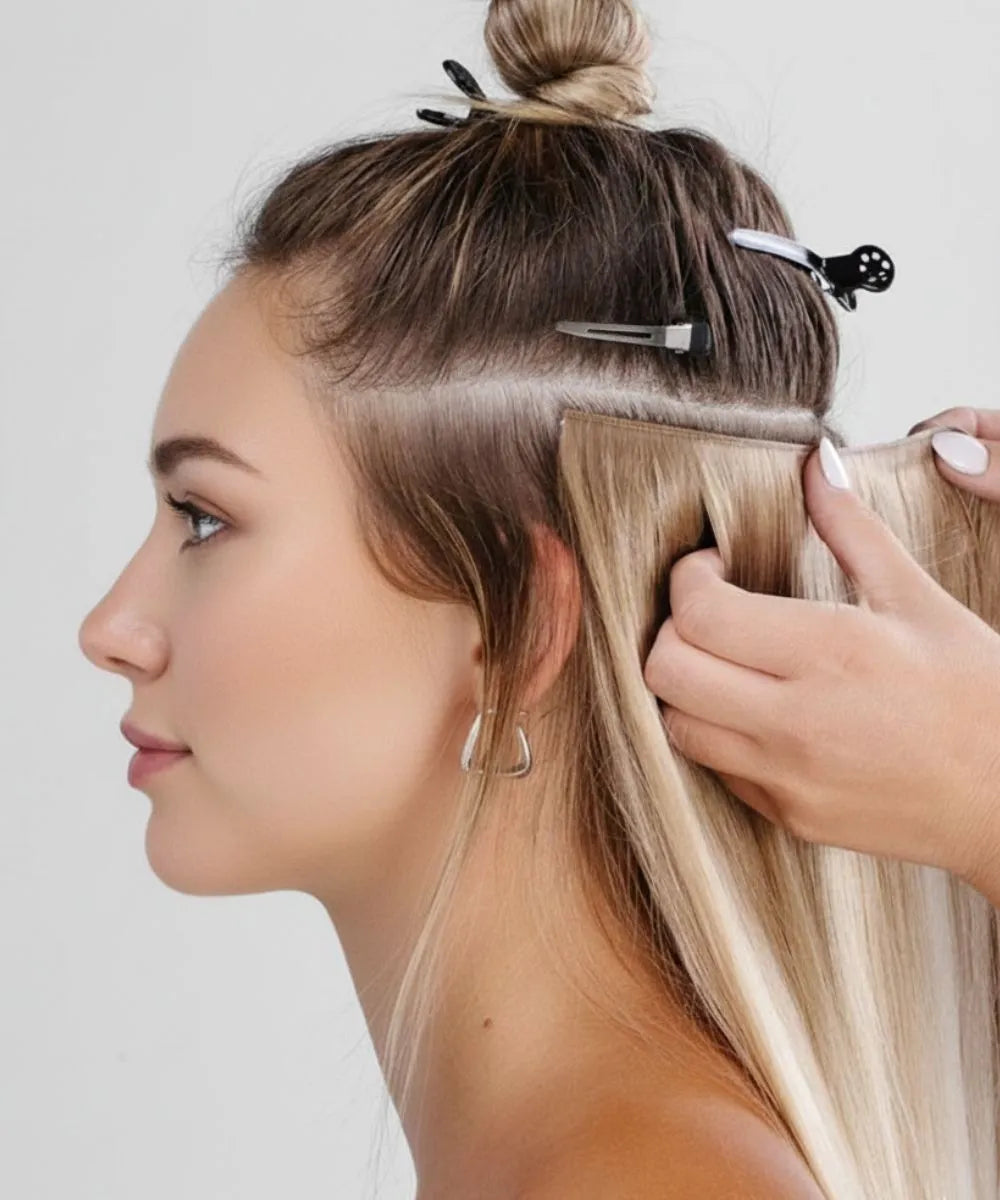
Classical tape extensions are the original tape-ins method most people think of. Each extension piece has a small adhesive tab at the top. A stylist sandwiches a thin section of your natural hair between two tape pieces.

Advantages for fine hair
- Very lightweight and comfortable
- Fast installation and removal
- Great for adding length + moderate volume
- Easy to customize placement for fine-hair density patterns
Best for
- Fine hair that has enough density to cover the tape tab
- People who prefer a classic, budget-friendly option
Potential downside
On very fine or very sparse hair, classical tape tabs can sometimes show if placed too high or without enough cover hair. That’s why “invisible” options like injection tape became popular.
Type 2: Injection Tape Extensions (Invisible / Seamless Tape)
Quick intro
Injection tape (often called invisible tape-in or seamless injection tape) is designed to look like hair is growing from the scalp. Instead of hair being sewn onto the tape, strands are “injected” into a thin, transparent base, creating a more natural, less detectable top area.

Advantages for fine hair
- Transparent or very thin PU base
- Hair appears to come out of the tape (scalp-like effect)
- Best for hiding tabs in thin or fine hair
- More seamless blend, especially around the crown and sides
Best for
- Very fine hair
- People who are worried about visibility
- Anyone wanting the most natural “no-extension” look
Potential downside
Injection tape can require more careful handling during removal and retaping because the base is thinner. A gentle remover technique and professional maintenance are important.
Type 3: Tape Weft Extensions (Hybrid Tape + Weft)
Quick intro
Tape weft extensions are a hybrid: they combine the tape method with the fullness of a longer weft. Instead of many small tabs, you get a longer strip (like a weft) that attaches using tape. This can give bigger volume with fewer pieces.

Advantages for fine hair
- Fewer tabs = fewer points to hide
- More density in one piece (bigger impact)
- Wider/longer band (some systems can reach across the head)
- Designed for faster full-volume installs
Best for
- Fine hair that needs maximum volume
- Clients who don’t want a lot of small pieces
- People who prefer fewer sections and quicker application
Potential downside
Because tape wefts can carry more hair in one band, they need correct placement so the weight doesn’t stress fine hair. Proper sectioning and avoiding tight tension is key.
|
Type |
Look / Finish |
Best For |
Key Pros |
Watch Out For |
|
Classical Tape |
Natural, but tabs may show on very fine hair |
Fine hair with moderate density |
Affordable, easy to install, fast application |
May be visible if placed too high (near the crown/top layers) |
|
Injection Tape |
Most invisible, scalp-like finish |
Very fine, thin, or sparse hair |
Seamless blend, best choice for updos, ultra-natural look |
Needs careful removal + retaping to protect fine strands |
|
Tape Weft |
Fuller coverage with fewer pieces |
Fine hair needing more volume |
Fewer attachment points, fast full install, great fullness |
Manage weight + placement to avoid tension on fine hair |
FAQ (Common Questions)
1. Which tape extension is best for very fine hair?
For thin hair choose injection/seamless tape for minimal visibility
2. Are tape extensions damaging for fine hair?
Installed and maintained correctly, tape-in extensions pose a low risk of hair damage; improper application and excessive tension increase the risk of traction alopecia, but fine hair is more prone to stress. Damage usually comes from tension, improper removal, or keeping them in too long.
3. How long do tape-in last on fine hair?
Typically, you’ll need a move-up every 6–8 weeks, depending on hair growth, maintenance, and lifestyle. Fine hair may need slightly earlier maintenance if slippage happens.
4. Can I put tape in extensions near my hairline?
With fine hair, hairline placement must be done carefully. Many stylists prefer injection tape for more discreet blending near visible areas. noellesalon+1
5. What’s the biggest mistake fine-hair people make?
The biggest mistake is wearing extensions that are too heavy or installed too tight. If you feel constant tension or scalp soreness, something needs adjusting.
6. Tape weft or regular tape-ins: which gives more volume?
Tape weft usually gives more volume per piece and can cover more area with fewer sections.
7. Can I remove tape extensions at home?
Professionals recommend proper removal methods to avoid breakage. If you must remove at home, follow stylist-backed advice and use a correct remover method—tape-ins are considered easier than many other methods, but you still need care.
Final Takeaway: Which One Should You Choose?
Choose Injection Tape if you want the most invisible result for fine/thin hair.
Choose Classical Tape if you want a reliable, affordable option and your hair has enough density to cover tabs.
Choose Tape Weft if you want maximum volume with fewer pieces, but still need careful placement.
About Ugeat Hair
Ugeat Hair is a global leader in premium human hair extensions, offering a wide range of high-quality tape-in, clip-in, weft, and keratin extensions. Our products are crafted from 100% natural human hair, ensuring a seamless, natural blend with any hair type. Designed for comfort, durability, and easy maintenance, Ugeat Hair extensions are trusted by professionals worldwide for achieving stunning, long-lasting results.
Author Biography
Ava is an experienced expert specializing in hair extensions. With years of industry knowledge, she is dedicated to helping her audience understand the various types of hair extensions, how to choose the right ones, proper usage techniques, and essential maintenance practices to ensure long-lasting results.
Whether you're a beginner or an experienced hair extension enthusiast, Ava provides valuable information and tips to help you achieve your perfect hairstyle.

%20is%20typically%20best%20for%20very%20fine%20or%20sparse%20hair%20due%20to%20its%20thin,%20scalp-like%20base.%0AClassical%20tape%20is%20affordable%20and%20fast%20to%20install,%20suitable%20when%20hair%20densit...)
Leave a comment
This site is protected by hCaptcha and the hCaptcha Privacy Policy and Terms of Service apply.